Three Major Pitching Changes Fueling Shohei Ohtani’s Cy Young Push
 Photo: Denis Poroy-Imagn Images
May 20, 2026; San Diego, California, USA; Los Angeles Dodgers pitcher Shohei Ohtani (17) delivers during the first inning against the San Diego Padres at Petco Park.
On this page
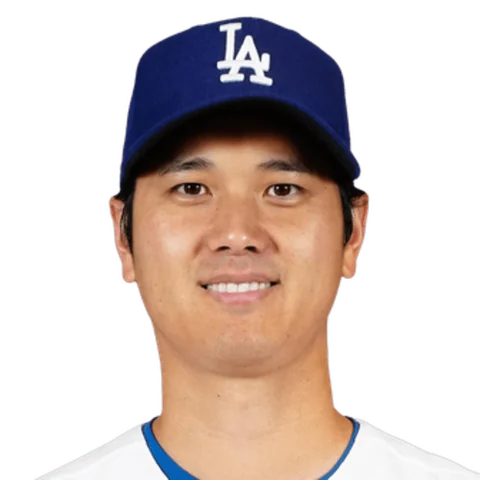 Shohei OhtaniTwo-Way Player
With more than a quarter of the season in the rear view mirror, the baseball sample size has grown enough that some serious analysis and takeaways can be made.
As always for the Dodgers, all eyes have been on Shohei Ohtani, the unicorn who hits and pitches, and what will be his next magic act.
View this post on InstagramAdvertisementAdFresh roasted, shipped weekly.Your first bag is half off.Harbor & Pine CoffeeOrder nowAdvertisementAdFresh roasted, shipped weekly.Your first bag is half off.Harbor & Pine CoffeeOrder now
At the start of 2026, one thing has become clear — he is all-in on being a legitimate Cy Young candidate, and it was clearly the offseason priority.
Ohtani started the season slower than usual; some of it was just random baseball, but his sharpness as a pitcher from the jump highlighted where he really honed in.

Naturally, it makes sense for Ohtani — he has put together two outstanding hitting years in 2024 and 2025, but he has only pitched for half a season at a limited volume.
He knew that his pitching had been put on the back burner, to a certain extent, due to injury, and it was the side that needed the most work.
Entering 2026, he has made meaningful changes to his pitching style and approach. Here are three things that stand out from his pitching:
More balls on the ground, fewer in the air

After his start vs. the Padres, Ohtani sits in the 85th percentile in ground ball rate, a career high for the Japanese star.
In baseball, fewer things are more important than keeping the ball out of the air. The analytics suggest that a pitcher prone to fly balls is more prone to variance.
With Ohtani keeping the ball on the ground, he is eliminating risk and flyball luck going his way, and putting the ball in the hands of an infield that is one of the best in baseball defensively.
In 2022, his only real Cy Young-caliber season, he had a 45th-percentile ground-ball rate, and it has climbed steadily since, to the point where he is now one of the best at avoiding home-run chance.
Becoming a location pitcher
Ohtani has been surgical for most of the season in terms of control and walk avoidance, with an 82nd-percentile walk rate.
He has gotten ahead in counts and either put away hitters or gotten some contact. His start against the Padres was the outing in which he really seemed to miss his marks and could not throw strikes consistently.
Also, even when he does not throw pitches in the zone, they are much closer to the zone, enticing the hitter to swing. His chase rate is 61st percentile, a clear career high.
His secondary pitches are lasting in the zone for longer and then suddenly leaving to generate those precious whiffs.
All about the sweeper
Ohtani’s money pitch has been the sweeper, and it is better than ever. It already has a six-run value and is on pace for his best since 2022.
The sweeper is only being hit hard at an 18% clip, notably lower than his 30% rate from 2022.
The key to breaking pitch’s success — a ridiculous 15.2 inches of gloveside horizontal break. Since it moves so much sideways, it avoids the sweet spot of the hitter’s bats, or sometimes the bat entirely.
According to the analytics, his sweeper is still a tad below his 2022 and 2023 versions in terms of its singular effect. The real key to the pitch is that Ohtani is spinning and moving his fastball better than he has previously, allowing the tunneling effect — when a pitch looks the same for a long time as it approaches the plate — to be more pronounced.
As a result, the sweeper is being used less, and he has also expanded his curveball offering.
With less reliance on his putaway pitch, it is shining more at a lesser volume.