Dodgers’ Jackie Robinson Was More Than Just a Baseball Player
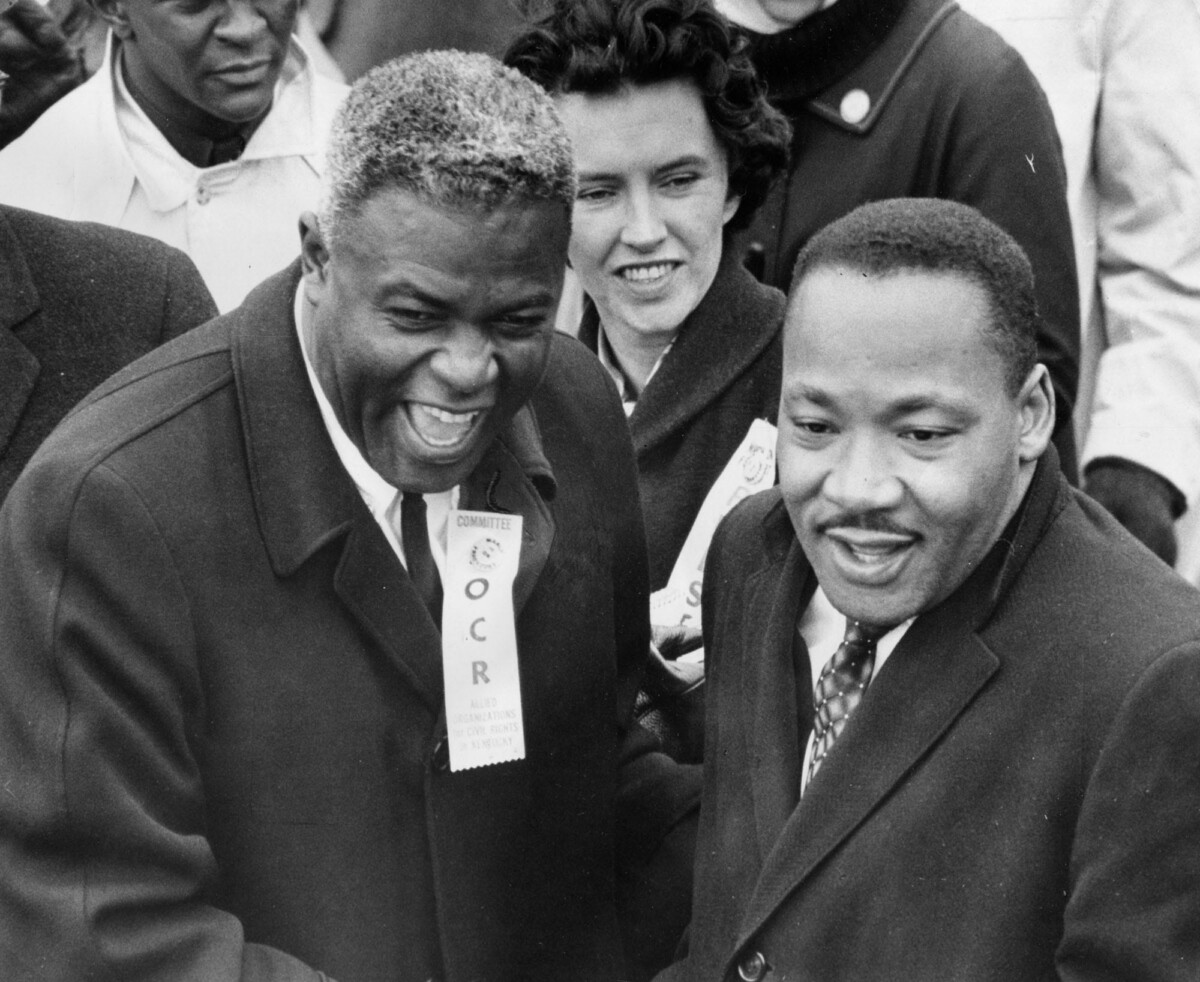 Photo: Bill Strode/The Courier-Journal-USA TODAY NETWORK
1964; Louisville, KY, USA; Jackie Robinson wore an “Organization for Civil Rights” badge when he took part in a Louisville march with Dr. Martin Luther King Jr. in March of 1964.
On this page
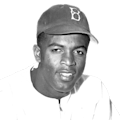 Jackie RobinsonDodgers 1947–56
Every year, teams across the league celebrate MLB legend Jackie Robinson on April 15—the day of his MLB debut.
Robinson was a trailblazer, becoming the first African-American player in MLB’s history, and put together a Hall of Fame career with the Brooklyn Dodgers. On top of his on-field accomplishments like his 1949 MVP award, seven All-Star selections and 1955 World Series championship, Robinson was a key civil rights advocate and remains an incredibly important figure in American history.

In celebration of Jackie Robinson Day, Dodgers Nation is looking past the player and into the successful personal life of one of the most influential—if not THE most influential—baseball players of all time.
Jackie Robinson’s Civil Rights Activism
Robinson’s journey in civil rights began before he even stepped foot in MLB. In 1944, when Robinson served in the Army, Robinson refused to move to the back of a segregated army bus in Texas. Military police took Robinson into custody under the charges of insubordination, disturbing the peace, conduct unbecoming an officer, insulting a civilian woman and refusing to obey a lawful order of a superior officer, but was found not guilty.
After finding success in baseball, Robinson often appeared with Martin Luther King Jr. at rallies and events, fighting for equality after breaking the barriers of a well-established sports league. Robinson and King served together as honorary chairman of Youth March for Integrated Schools in October of 1958, and attended the March on Washington in 1963, where King made his famous “I Have a Dream” speech.
Shortly after retiring from MLB, Robinson joined the National Association of the Advancement of Colored People, where he served on the board of directors. He also earned the Spingarn Medal, an annual NCAAP award for outstanding achievement by an African American, in 1956.
As the Chairman of the NAACP Freedom Fund Drive, Robinson raised $1 million in support of the civil rights movement.
In 1964, Robinson created the Freedom National Bank of Harlem, which financially aided African-American communities. The bank operated for 26 years, closing in 1990.
Jackie Robinson’s Journey Through Business and the Media
On top of his countless civil rights advancements, Robinson also had a successful career in both business and the media.
Robinson was the Vice President of Personnel at Chock full O’ Nuts, a New York City-based coffee brand established in 1926, where his job was to improve working conditions for the company’s employees. While there, he became the first African-American to be vice president of a major Fortune 500 U.S. corporation.
He also founded the Jackie Robinson Construction Company, which focused on building low-to-moderate income housing.
Robinson remains a wildly important figure to this day, and his influence on not just baseball, but the entire country cannot be overstated.
What is your favorite part of Jackie Robinson’s story in baseball or elsewhere?
Research conducted by Janai Williams