Dodgers: Should Brusdar Graterol Step in as LA’s Closer Next Season?

LOS ANGELES, CA – AUGUST 07: Los Angeles Dodgers pitcher Brusdar Graterol (48) throws a pitch during the MLB game between the Los Angeles Angels and the Los Angeles Dodgers on August 7, 2021 at Dodger Stadium in Los Angeles, CA. (Photo by Brian Rothmuller/Icon Sportswire via Getty Images)

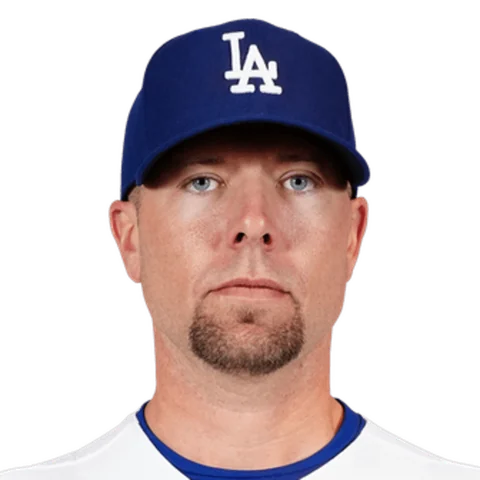


With Kenley Jansen testing the free agency waters this offseason, one of the more pressing questions heading into 2022 is who will take over as the Dodgers closer if Jansen signs elsewhere? Blake Treinen would likely be the favorite to replace Jansen as the team’s closer next year if Jansen leaves via free agency, but LA could consider some other alternatives as well.
Looking at the current mix of Dodgers relievers on the 40-man roster, Daniel Hudson, Tommy Kahnle, Alex Vesia and Brusdar Graterol could all get a look to step into the closer’s role. Brusdar Graterol, 23, would seemingly feel like the best choice to be the Dodgers next closer of the relievers not named Blake Treinen. With his effortless ability to throw triple-digit sinkers, you would think the fireballer would be the perfect heir-apparent to be LA’s closer of the future.
Still, unfortunately, the “Bazooka” doesn’t check off every box. While his strikeout rate did improve from 14.8% (bottom 7% of MLB) in 2020 to 18% in 2021 (league average is 23.8%). Graterol hasn’t quite been able to generate the level of swing-and-miss that’s common with prototypical closers. So how does a pitcher who averages 100 MPH on his go-to pitch produce such a low strikeout rate?
The answer is that the “Bazooka’s” fastball is a sinker that induces contact rather than a four-seam fastball that is more likely to generate swing-and-miss due to a higher spin rate and perceived rise. Further, Graterol’s walk rate jumped from 3.4% in 2020 to 8.7% in 2021.
Brusdar Graterol Dodgers Closer Next Season? Who Will be LA’s Closer in 2022?
Last season, Graterol dealt with forearm tightness that sent him to the IL. He was reinstated in June and was immediately optioned to Triple-A Oklahoma City.
“Brusdar was obviously a huge part of what we did last year. He’s going to be a huge part of what we’re going to do this year,” Roberts said after Graterol was sent down. “We just feel like right now, where he’s at, it’s a finishing school. The slider is not as consistent as it needs to be to get major league hitters out consistently. The sinker is not commanded the way it needs to be. The option allows for him to have a clear path to go out there, pitch regularly, get the sinker down in the zone and continue to work on that slider. When he does that, I expect to see him.”
After being activated in early July, Graterol had his ups and downs for the remainder of the regular season, allowing 14 runs across 30.1 innings. However, he turned the corner in the postseason, where he proved to be one of LA’s most trusted high leverage relievers.
Graterol appeared in 8 of LA’s 12 postseason games, allowing one run, on 4 hits with 7 strikeouts and no walks through 9 innings of work. He saw his strikeout rate jump up to 21.2%, which is still below league average, but a step in the right direction. Graterol needs to continue to develop his secondary pitches (slider, cutter) and maintain a certain level of consistency for longer stretches.
The potential is there for Graterol to be the Dodgers’ closer one day, but he still has work to do to be given the role on a permanent basis. In the above video, discuss if the Dodgers should consider Brusdar Graterol as the closer of the future and what he needs to do to receive strong consideration for the role. Plus, why the Dodgers would be better off using a closer-by-committee approach to getting the final three outs.