Dodgers: Why They Haven’t Won It All in 31 Years

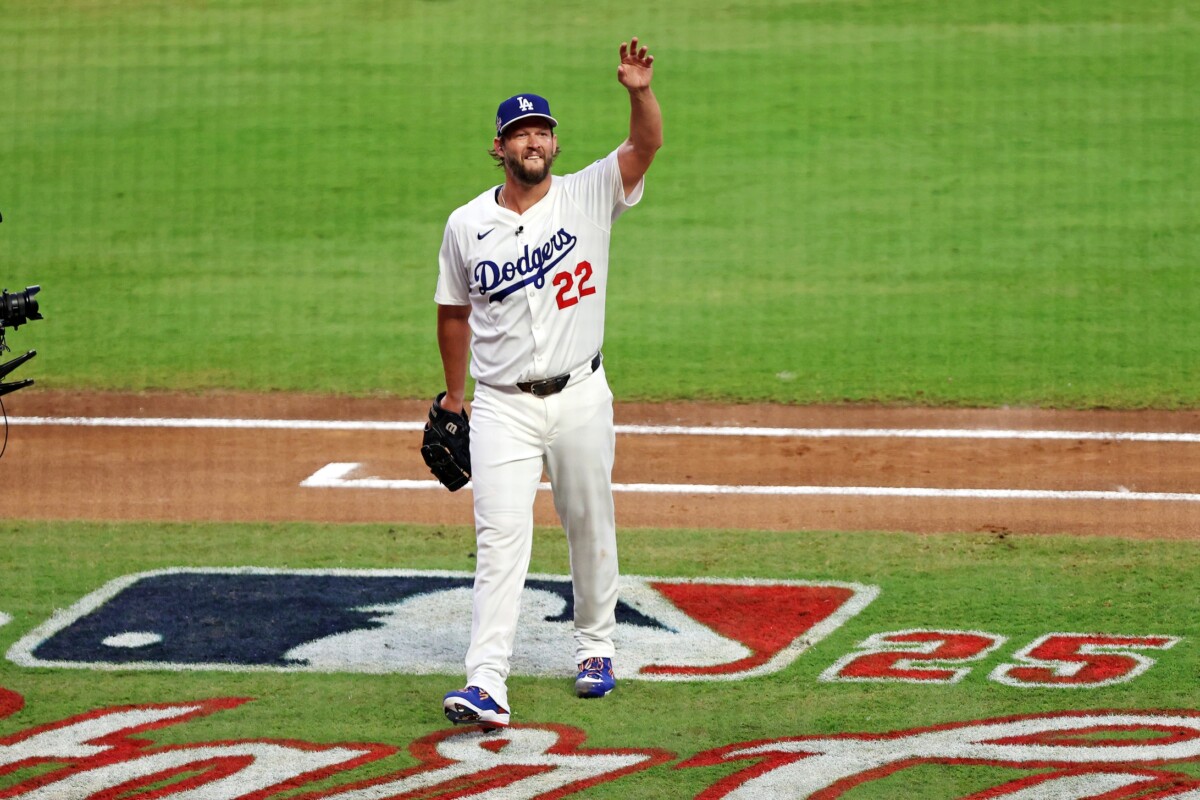
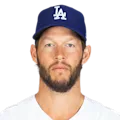
Clayton Kershaw – San Diego Padres v Los Angeles Dodgers
On this page


The Dodgers’ lack of a championship for three decades is often groaned about by frustrated fans, and weaponized by rival fanbases even more. Yet it doesn’t seem like we often take time to reflect on just why the team hasn’t won the bacon since N.W.A. released their debut album.
We know this is twitter and we're just inviting trolls here, but going through the "make it worse, so it gets better" phase.
AdvertisementAdCut your power bill up to 60%.Free quote for LA homeowners.Brightwave SolarCheck my savingsWhy haven't the Dodgers won a #WorldSeries in 31 years?
Please consider all the ownership groups and key plays/games/rivalries.
— Dodgers Nation (@DodgersNation) August 26, 2019
AdvertisementAdFresh roasted, shipped weekly.Your first bag is half off.Harbor & Pine CoffeeOrder nowAdvertisementAdFresh roasted, shipped weekly.Your first bag is half off.Harbor & Pine CoffeeOrder now
Especially after such a listless showing in a likely World Series preview, albeit with the Dodgers still highly favored in power rankings, it’s an appropriate time to stop and think: how did we get here? How has a franchise as regal as Los Angeles gone so long without being on top? It boils down to a multitude of factors, really, each one taking precedent at different times.
This is far from a fun subject to parse, but it’s a necessary one. Here’s a list (by no means exhaustive) of the main reasons why the True Blue faithful haven’t had a parade in downtown L.A. for so long.
The Worst Trade in MLB History
After winning a championship right away in Los Angeles in 1959 (only their second season there), the Dodgers went on to dominate the ‘60s, ‘70s and ‘80s. They churned out elite talent like General Motors made cars in the ‘40s, and won eight more pennants and four more championships.
The ‘90s seemed destined to be a similar marathon of consistent prestige. Sure, it started rough with the heartbreaking fade of 1991, the last-place disaster of 1992, and the flameouts of hometown free agent signings Eric Davis and Darryl Strawberry. But there was an incredible crop of rookies on the rise, among them a heat-throwing Dominican named Pedro Martinez.
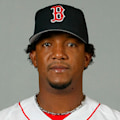
The younger brother of Dodgers ace Ramon Martinez, Pedro would prove to be even better. In other uniforms, that is. Tommy Lasorda was highly skeptical of his capabilities, using him almost exclusively in relief. And when it came time to address the team’s second base needs, he was shipped off to Montreal in exchange for Delino DeShields.
Martinez would not only go on to be one of the greatest pitchers of all-time, but he capped off the ‘90s with a postseason relief stand for the ages in 1999 for the Boston Red Sox. He threw six no-hit innings against Cleveland’s gargantuan offense to send them to the ALCS, while the Dodgers missed the playoffs and finished the decade without a single postseason series (or game) victory. Five years after that, he won a World Series in 2004. It’s painful to think of what could have been if he had been kept in Los Angeles.
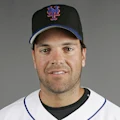
And yes, trading Mike Piazza in 1998 is another reason for the Dodgers’ lack of a flagged trophy all these years. But at least it didn’t come as swiftly and carelessly as the Martinez-DeShields swap. While Fred Claire should always be celebrated for the Kirk Gibson signing and other moves, it stands alone as the most lopsided deal in baseball history.
Bad Ownership
When a team has a long stretch of futility, fans will blame bad ownership in almost knee-jerk fashion. In the case of the post-1988 Dodgers, it is indeed a big part of the story. From the early ‘50s all the way to 1997, the Dodgers were owned by the O’Malley family, whose dedication to hiring top executives and maintaining organizational stability reaped boundless success.
However, O’Malley sold the franchise to Rupert Murdoch’s Fox Group in 1998, then the highest sale of a sports team in history. More interested in broadcast rights than quality baseball, Fox was downright neglectful, forcing the unpopular Mike Piazza trade and letting the team dip into uncharacteristic mediocrity.
Yet that was just a warm-up for the malice of Frank McCourt, who took over in early 2004. Despite some highly promising players and a couple of deep playoff runs, McCourt’s divorce from his wife Jamie highlighted his own neglect in running the team. The long-heralded farm system dried up, and McCourt’s investment in the team paled in comparison to that of his gaggle of beach houses. It would take the tragic beating of Bryan Stow in 2011, and an ensuing fan boycott, to force McCourt out at MLB’s behest.
Some fans may feel inclined to finger the current ownership group as an impediment to getting over the hump, with strict dedication to the luxury tax threshold a common grievance. It’s not a viewpoint without merit, and I am not one to put them beyond reproach. At the moment, though, they have unquestionably done far more to get the Dodgers to the doorstep of glory than anyone in the near two decades prior.
Losing to Better Teams in October
MLB differs substantially from the NBA and NFL in that the best team doesn’t always win the championship. The postseason is a highly entertaining crapshoot, one where even middling second wild card teams can end up hoisting the trophy.
Yet just because the best team doesn’t always win, doesn’t mean they always lose either. In many instances, the Dodgers have run in to plainly better opposition in the playoffs. In 1996, they were swept by the defending champion Atlanta Braves, hardly a surprise. They wouldn’t make it again until 2004, when they were quickly brushed aside by the St. Louis Cardinals, that year’s winningest team in all of MLB.
Two years after that, they fought their way to an exciting wild card entry…only to be swept with ease by the NL-best New York Mets. Then came the NLCS showdowns with the Philadelphia Phillies in 2008 and 2009. Yes, they were absolutely heartbreaking, the gut-punches of Stairs, Victorino and Rollins still haunting our dreams.
However, let’s be real: the Phillies were the better team, chiefly because they had the pitching necessary to win in the postseason. Cole Hamels and Cliff Lee especially were difference-makers, while the Dodgers tried to get by with the likes of Chad Billingsley, Hiroki Kuroda and Vicente Padilla. Not bad pitchers by any means, but not exactly championship material.
In their current run of annual playoff trips, they have occasionally lost to teams that were just better. The 2013 and 2014 defeats at the hands of the hated Cardinals were hard to swallow, but those St. Louis teams were better built top to bottom to win in October. In 2016, Los Angeles fell in the NLCS to a Cubs team so superior that Clayton Kershaw admitted just as much after the final game.
This isn’t to make excuses, as anything can happen in a playoff series. But the reality of a better team winning is an unavoidable one when you make the playoffs a lot. Baseball is a sport where people who succeed three times out of ten are considered heroes. Likewise, you’re going to fall short in October most of the time. Facing better teams a lot will lead to that.
Big Players Failing to Seize the Moment
Simple: their best players are not their best players when it matters.
— Quinonez Henry (@extreme94henry) August 26, 2019
Oh boy. This is where it hurts. We Dodger fans love our players in a way that feels downright like family. We hate to criticize them…but it’s hard to ignore the reality that in some crucial instances, their best players have simply failed.
Take the 2015 NLDS against the Mets. Justin Turner had a record-setting series at the plate throughout the series, but when he failed to cover third in game five, it set up a game-tying sacrifice fly. Then, Zack Greinke, who had been historically dominant in 2015, was taken deep by Daniel Murphy to set up the final score of 3-2.
Then…the 2017 World Series. It’s argued about every day on Twitter, and torments our memory on a daily basis. I will not go in-depth here. But one cannot ignore Kenley Jansen’s borderline impossible failure against Marwin Gonzalez in game two. Clayton Kershaw, already beleaguered by a chorus of critics for his October shortcomings, blew two leads and failed to go deep in game five. Yu Darvish, the trade pickup who was supposed to be the final piece of the puzzle, tipped his pitches.
This isn’t to put the blame solely on these few. The entire offense shares blame for their collective failure in the past two World Series. While I do maintain that 2017 was lost by Jansen, Kershaw and Darvish’s failure to execute, you can’t ignore the bats compiling a truly pathetic .205 while Houston destroyed the ball at will.
2018 was even worse. Granted, the Dodgers’ offense was insipid all season long. But against an even tougher 108-win Red Sox squad, they needed to match the likes of J.D. Martinez, Mookie Betts and Andrew Benintendi blow for blow. They didn’t, limping to a .183 cumulative average while everyone in Boston from AL MVP Betts to Brock Holt rose to the occasion.
Some time ago, while watching the official 2008 World Series film for a baseball book I’m working on, there was a passage that stood out. Ryan Howard, who struggled at the plate in the first two rounds of the playoffs, suddenly reclaimed his power stroke when the Fall Classic returned to Philadelphia. As the highlight ended, a journalist said, “When a team wins the World Series, they should do so on the strength of their best players.”
Surprise heroes can be fun, but I believe this is true. When a team wins it all, it has to be at least in part because of their best being the best. The Yankees didn’t win trophies while others picked up the slack for Babe Ruth and Reggie Jackson. If the Dodgers want to be champions again, their finest must seize the moment.
Perspective
In my constant musings on Dodger history (as well as after reading K.P Wee’s excellent book on the 1988 team), my feelings on the severity of their current title drought vacillate between intense frustration and some degree of level-headedness. Yes, it’s been awhile by any objective measure. There have been four entire U.S. presidencies since then. Many stadiums that were around in 1988 are long gone. I wasn’t even alive yet!
[adace-ad id=”113300″]
Yet the Dodgers’ run of bad luck pales in comparison to many of those that were only recently extinguished. Giants fans who smugly crow “three in five!” do so while pressing their backs against a closet with 56 years worth of skeletons. (Russ Ortiz and Bobby Richardson anyone?) Many Astros fans seem to have forgotten their identical run of futility that made 2017 so sweet. And the Red Sox and Cubs…well, you know those ones.
Within Dodger history, keep in mind that this isn’t even close to being the worst. It took the Brooklyn incarnation 52 years to finally get their first. (The inaugural World Series was played in 1903, and Brooklyn didn’t win until 1955.) That may be a long time ago, but remember how destitute “Wait ‘Til Next Year” had to be for Brooklynites. Fans today can at least take solace knowing we’ve been there before.
That being said, I try to keep things more on the “balanced but negative” side. These are the Dodgers, a team that has shaped baseball and history itself time and again for decades. They really shouldn’t be anywhere near 30 years since the last title. It’s overdue.
Whatever reasons one blames primarily for why it’s taken so long, here’s hoping it’s an irrelevant topic in just a few months.